
Living Room Blinds: How to Balance Light, Privacy and the View

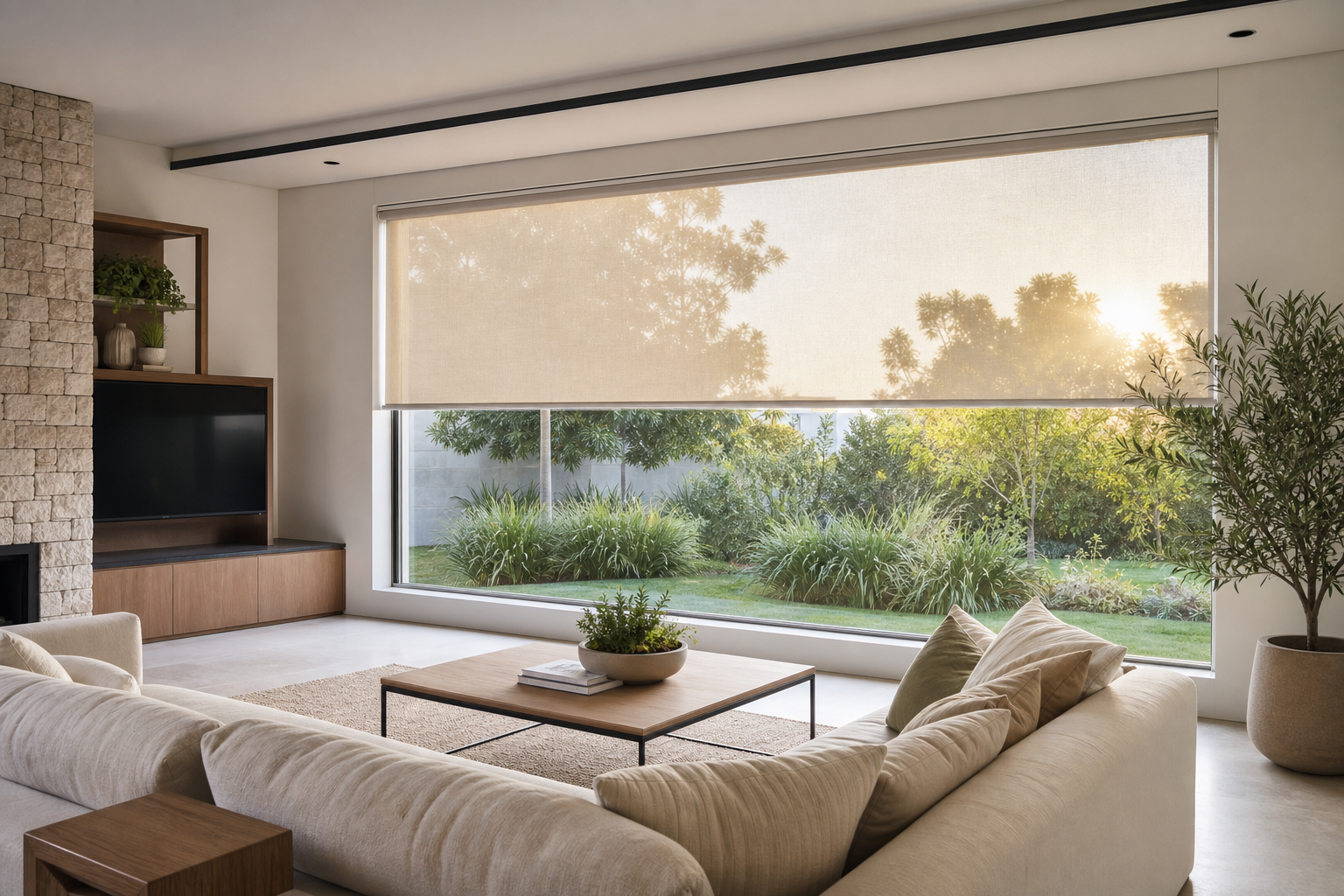
The living room often asks more of a window treatment than any other space. It needs to feel bright during the day, comfortable when the sun is low, private when evening arrives and visually connected to the rest of the home. The best living room blinds are therefore not selected by style alone. They are chosen around the window, the sun path, the view and the way the room is used.
This guide explains how South African homeowners can compare sunscreen roller blinds, light-filtering options, Venetian blinds, zebra or vision blinds, cellular blinds and motorised systems before arranging a professional measure and quote.
Start with the living room problem, not the product
Stand in the room when the light is most difficult. A north- or west-facing lounge may be comfortable in the morning but receive strong, low-angle sun later in the day. A street-facing window may need daytime privacy without making the room feel enclosed. A television or work surface may suffer from reflections even when the rest of the room feels pleasant.
Before comparing fabrics and finishes, answer five questions:
- At what time does direct sun enter the room?
- Is glare affecting a television, reading chair or other activity?
- How important is the outward view when the blind is lowered?
- Do you need privacy during the day, after dark, or both?
- Are any windows wide, high or difficult to reach?
These answers usually narrow the options faster than starting with a colour chart.
Compare the main living room blind options
| Blind type | Main strength | Light and privacy | Planning point |
|---|---|---|---|
| Sunscreen roller | Glare control with more daytime outward visibility | Filters direct light; privacy changes after dark | Compare fabric openness and colour in the actual room |
| Light-filtering roller | Soft, even daylight with a minimal finish | Diffuses light; opacity varies by fabric | Check silhouettes and night-time privacy before selection |
| Venetian | Precise directional control | Tilting slats redirect light and sightlines | Choose aluminium, basswood or suitable faux wood for the room conditions |
| Zebra or vision | Contemporary layered appearance | Alternating sheer and opaque bands adjust the balance | Band alignment and fabric choice affect the final result |
| Cellular or honeycomb | Soft textile finish and air-pocket construction | Available from filtered light to stronger room darkening | Fit, fabric and glazing influence comfort performance |
| Motorised blind | Convenient operation for large, high or grouped windows | Depends on the selected blind and fabric | Confirm dimensions, system, power, controls and access |
Use the table as a starting point rather than a final specification. Two living rooms with the same window size can need different solutions because orientation, neighbouring buildings, television position and daily routines differ.
Sunscreen roller blinds for glare and daytime views
Sunscreen roller blinds are a practical starting point where the room needs relief from harsh sun without losing all its natural light. The mesh-like fabric filters glare and can retain more of the outward view during the day. This makes it useful for living rooms that face a garden, mountain or open landscape.
Fabric openness matters. A more open weave may preserve the view more clearly but provide less shading and privacy. A tighter weave can increase screening while changing the view and daylight level. Darker sunscreen fabrics often make the outward view appear clearer, while pale fabrics can feel softer in the interior. Physical samples should be reviewed against the actual window because screens and online images do not reproduce the effect reliably.
Sunscreen fabric does not provide complete night-time privacy. When indoor lights are on and it is darker outside, visibility can reverse. Where evening privacy is important, consider pairing the sunscreen blind with curtains, a second blind or another suitable layer.
Compare sunscreen and blockout roller fabrics.
Light-filtering blinds for a softer atmosphere
A light-filtering roller blind diffuses daylight rather than preserving a clear outward view. It can create a calm, even glow and reduce the visual contrast around a bright window. This may suit a lounge where softness and a minimal fabric panel matter more than seeing through the blind.
Light-filtering does not describe one fixed level of privacy. Fabric colour, weave and room lighting affect how much shape or movement can be seen from outside. Review the sample during daylight and, where possible, after dark before approving the specification.
Venetian blinds for changing light
Venetian blinds use tilting slats to redirect light throughout the day. They can be useful in street-facing lounges or rooms where the sun angle changes across the window. Tilt the slats to protect a screen or reduce a direct sightline while allowing useful daylight into another part of the room.
Material changes the character and suitability of the blind. Aluminium creates a crisp, lightweight finish. Basswood brings natural warmth where the room conditions suit timber. Suitable faux-wood options may be considered where moisture or easy care matters more. The installer should confirm the proposed material for the exact room and opening.
Zebra and vision blinds for a layered contemporary look
Zebra or vision blinds alternate sheer and opaque fabric bands. As the layers move, the bands align differently to change the balance between filtered light and privacy. The result is more visually layered than a plain roller blind while remaining compact at the window.
They are best treated as adjustable light-filtering treatments rather than a universal answer to privacy or darkness. Review the bands in both open and closed positions, and ask how the selected fabric behaves after dark.
Cellular blinds for softness at the window
Cellular blinds, also called honeycomb blinds, use folded fabric cells that create air pockets at the window. The structure gives the blind a softer appearance than a flat roller and can help reduce heat transfer, subject to the glazing, fit, fabric and how fully the opening is covered.
Light-filtering cellular fabric can soften a bright living room. More opaque options can provide stronger room darkening, although edge gaps and mounting position still influence the installed result. A cellular blind does not replace suitable glazing, ventilation or external shading where those measures are needed.
Explore cellular and honeycomb blinds.
When layering blinds and curtains works better
One window treatment does not always need to solve every requirement. Layering can give a living room different modes through the day. A sunscreen roller blind may manage glare and preserve more of the daytime view, while bespoke curtains add evening privacy, texture and a softer acoustic finish.
Plan both treatments together. The blind needs enough clearance to operate, while the curtain track, fullness and stack should not obstruct doors, handles or the main view. Coordinating colour does not mean choosing identical materials; it means creating a considered relationship between fabric, hardware and the room.
Explore bespoke curtain options.
Plan large, wide and high living room windows carefully
A single wide blind is not always preferable. Large openings may need to be divided, linked or motorised so that the system operates within suitable limits and follows the window architecture. Divisions should align with mullions or door panels where possible and preserve access to the active opening.
For high or grouped windows, motorisation can make regular adjustment practical. Confirm which blind types are suitable, how power will be provided, where controls will sit, whether blinds should operate individually or as a group, and how maintenance access will be maintained. Smart-home compatibility must be confirmed for the selected system rather than assumed.
Plan motorised blinds for demanding windows.
Mounting position changes the result
A recess fit creates a compact, integrated appearance but needs enough depth and clear space around handles, security fittings and opening windows. A face fix can increase overlap and may reduce edge light, provided the wall, trim and surrounding space allow it.
Measurement should cover more than width and drop. The installer should check fixing surfaces, recess depth, sill projection, handle clearance, opening direction, furniture placement and access for operation. These details protect both the appearance and the everyday function of the blind.
Keep a consistent look across connected rooms
Open-plan homes often connect the lounge, dining area and kitchen. A coherent scheme does not require the same product on every window. Use a coordinated colour family and hardware finish, then vary the fabric or blind type according to each area’s needs.
For example, a sunscreen roller can serve view-facing lounge windows, an easy-care aluminium Venetian can suit a nearby kitchen, and curtains can bring softness to the dining area. Reviewing all samples together helps the home feel intentional without compromising performance.
Questions to ask during the measure
- Which fabric best manages the actual sun angle and glare?
- How will privacy change after dark?
- Should the blind fit inside the recess or overlap the opening?
- Will the treatment clear handles, doors and security fittings?
- Should a wide opening be one blind or several aligned blinds?
- Is manual operation practical for every window?
- How will the blind stack or roll when fully open?
- What cleaning method suits the selected material?
Living room blinds FAQ
Which blinds are best for a sunny living room?
Sunscreen roller blinds are a useful starting point where glare reduction and daytime views matter. Venetian blinds offer directional adjustment, while cellular blinds create a softer fabric layer. The correct choice depends on orientation, view, privacy and the time direct sun enters.
Which blinds provide privacy without making the lounge dark?
Venetian blinds can redirect sightlines while admitting daylight. Sunscreen fabric can improve daytime privacy while preserving more of the view, but it does not guarantee privacy after dark. Layering may be appropriate where day and evening needs differ.
Can living room blinds be motorised?
Many suitable roller and other blind configurations can be motorised. Suitability depends on the dimensions, chosen system, power and installation planning.
Do blockout blinds make sense in a living room?
They can help where strong darkness or screen contrast is important, but an opaque blind removes the view when lowered. A layered solution may give a shared living space more flexibility.
How much do custom living room blinds cost?
Price depends on dimensions, blind type, fabric or finish, operation, number of blinds and installation access. A measured quotation is the reliable way to compare the same scope.
Choose living room blinds in the room itself
The most confident decision comes from seeing samples against the actual daylight, furniture and finishes. ART Lifestyle can help compare suitable blinds, confirm the fit, measure each opening and provide a project-specific quotation before professional installation.
Book a living room blinds consultation or call 083 298 1740.
3 thoughts on “Living Room Blinds: How to Balance Light, Privacy and the View”