
Sheer or lined curtains for light and privacy

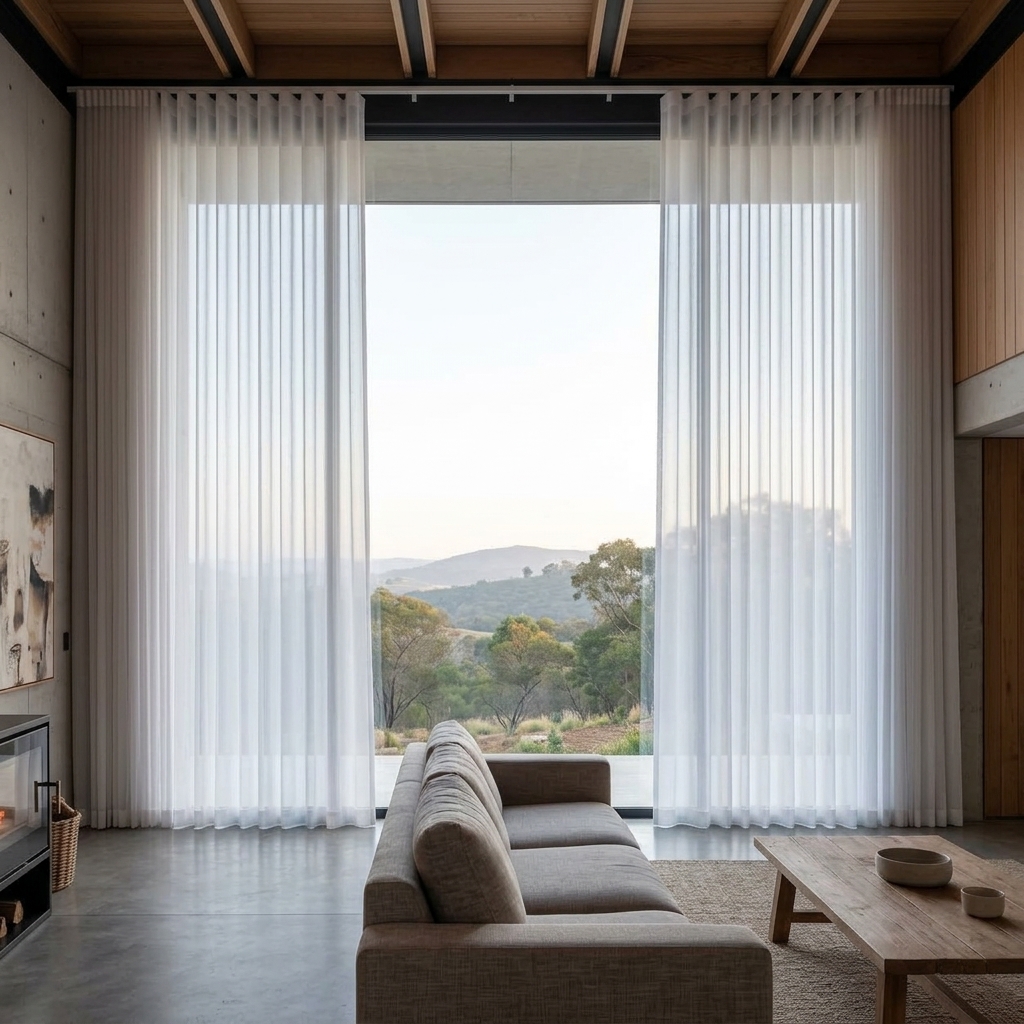
Featured image: illustrative example.
Should you choose sheer or lined curtains
Choose sheer curtains when your priority is soft daylight and an open, light appearance. Choose an appropriately lined or opaque curtain when evening privacy or stronger room darkening matters more. A room that needs both can use separate layers. Check the actual fabric, lining and fit before deciding how much screening the finished curtain will provide.
Curtains are part of the way a room changes through the day. The treatment that feels comfortable over breakfast may leave you exposed once the lights come on. Start by describing those different moments, then select a combination that works with your window and your routine.
What does a sheer curtain do
A sheer lets light pass through its open or lightweight construction. It can soften a bright window and introduce texture without the visual weight of a heavier curtain. The amount of view-through depends on the weave, colour, fullness and light on either side of the glass.
Treat daytime privacy as something to test. Stand at the relevant outside viewpoint while someone checks the room from within. A pavement, neighbouring balcony and garden path create different sightlines. After dark, repeat the test with the room lights on. A sheer that feels private during daylight may reveal people or movement in the evening.
For a lounge overlooking a private garden, that balance may be entirely appropriate. For a street-facing bedroom, a second layer is worth discussing. The living room light and privacy guide explains how to define the room's wider requirements before selecting materials.
Are all lined curtains blackout curtains
No. Lining is an additional layer, and its properties vary. A lining may support the appearance and body of the curtain, filter light or provide stronger room darkening. Ask to see the proposed face fabric and lining together instead of assuming that the word lined describes one fixed result.
Blackout material and a completely dark room are also different things. Light may still enter above the track, between panels or around the sides. Describe where unwanted light appears and how dark you want the room to be. The specification should address coverage as well as the textile.
A guest room used mainly at night may have a different brief from a bedroom used by someone sleeping during the day. In either case, compare samples at the window. The bedroom privacy and darkness guide is a useful starting point for that conversation.
When should you use two curtain layers
Separate sheer and heavier layers can give the room two practical settings: filtered daylight when the outer layer is open, and greater screening when it closes. This can suit a room that feels overlooked in the day but should still remain bright.
Plan the controls and the order of the layers with the installer. Check whether each can open fully, where the fabric will gather and whether the window or door can still be used comfortably. The arrangement must work with handles, furniture and the space available beside the glass.
You can also discuss curtains alongside an existing blind. The guide to layering curtains and blinds covers clearance and stack-back, the space occupied by an open curtain. Use that guide for the fitting details rather than deciding from a straight-on photograph alone.
How should you compare fabric samples
Begin with the same short brief for every sample: the room, the time of day, the privacy requirement and the preferred appearance. Hold the fabric at the actual window with the proposed lining behind it. Review it under both daylight and the room's evening lights.
Look at colour beside the floor and upholstery, then assess how much shape is visible through the material. If possible, see a larger hanging sample so that you can judge its folds and body. A small swatch is useful for colour, but it cannot show the entire installed effect.
Ask about care before approving the fabric. Confirm the recommended cleaning method for the complete curtain, including its lining and heading. Avoid assuming that a washable face fabric makes the finished, lined treatment suitable for machine washing.
A useful brief for your quotation
Write one sentence per room. For example: the lounge needs soft daylight while people are home and stronger privacy in the evening. Add a whole-wall photograph, the number of windows and any existing blind or track you would like assessed.
Mention your location at the start. ART Lifestyle serves the Garden Route, Somerset West and Helderberg, and Klerksdorp and the surrounding North West service area. The team should confirm arrangements for your specific property before measurement is booked.
Frequently asked questions
Can sheer curtains provide privacy at night
Do not rely on that without testing the selected fabric with the lights on. Discuss a more opaque layer where evening privacy is important.
Do blackout curtains guarantee complete darkness
No. The fabric can block transmitted light while gaps around the installation still admit it. Track position, panel closure and coverage need consideration.
Can I keep my existing blinds
Possibly. Have their condition, operation and clearance checked as part of the curtain measure. The combined arrangement must remain easy to use.
Which option is cheaper
A useful comparison needs the same opening size, fabric, lining, heading, hardware and installation scope. Request a specification-based quotation rather than comparing the names of two curtain types.
Request a Quotation
Tell ART Lifestyle which rooms you are planning, your location and whether daylight, privacy or darkness is the main priority. Request a Quotation or call 083 298 1740 for the next step.