
Outdoor Blinds vs Awnings: Which Shade Solution Is Better?

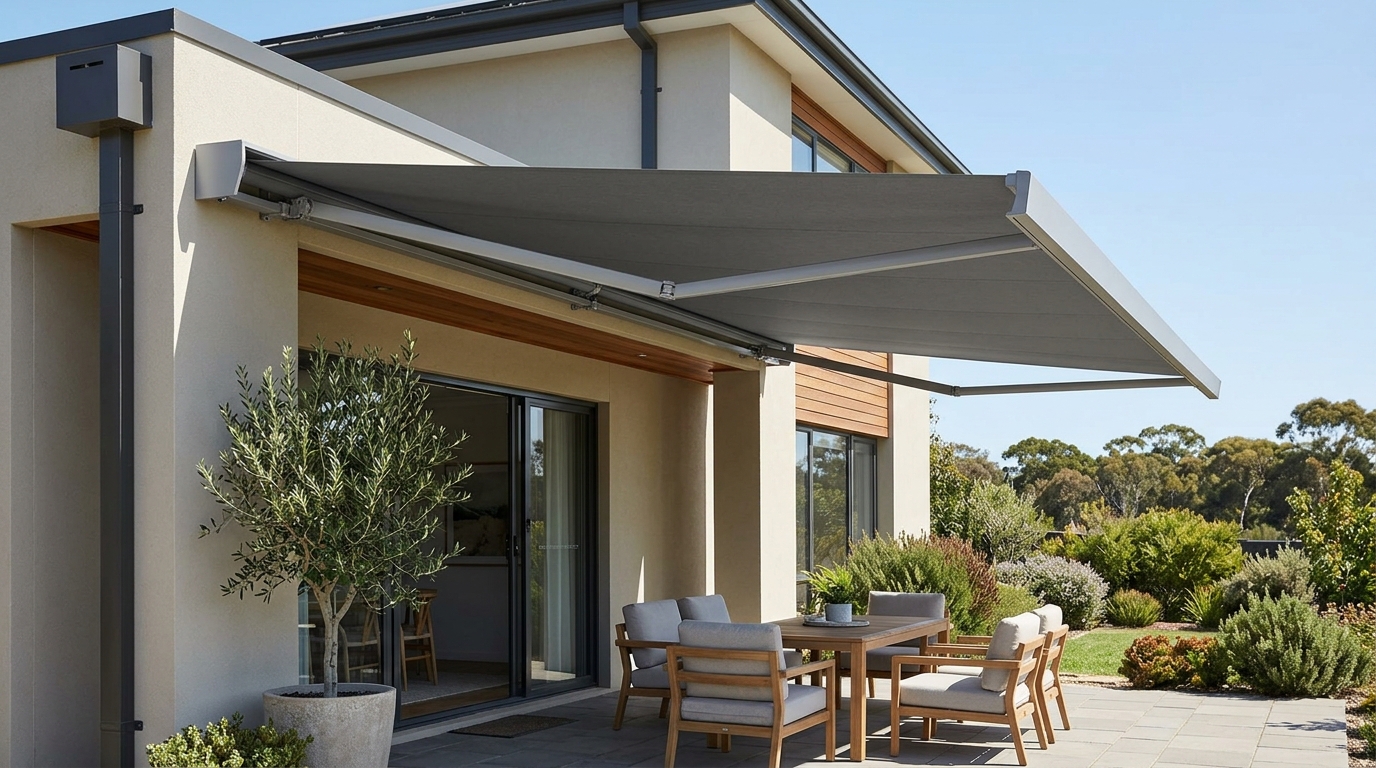
Outdoor blinds and awnings both control sun, but they do it from different planes. An awning projects overhead to create shade. An outdoor blind drops vertically to screen the side of an existing roof, pergola or patio opening.
Once that distinction is clear, the choice becomes easier: decide where the unwanted sun and weather enter the space.
Choose an awning when you need overhead cover
Fold-arm and cassette awnings can shade an uncovered terrace or window without permanent posts at the outer edge. They are especially useful when high-angle sun falls from above. When retracted, the area remains open.
Projection, pitch, wall condition and wind exposure determine what is practical. Awnings are primarily shade products and should generally be retracted in unsuitable wind or heavy weather according to the product instructions.
Choose outdoor blinds for side protection
Vertical outdoor blinds work with an existing overhead structure. They reduce low-angle morning or afternoon sun, improve privacy and can limit wind and wind-driven rain entering from the side. Guide options range from free-hanging to channel and zip-guided systems.
They do not replace a roof. If rain is entering from above, an awning, pergola or louvre roof may be the relevant starting point.
Wind, rain and privacy differences
An awning creates valuable shade but does little for side wind or overlooking neighbours. An outdoor blind can address those side conditions, although its fabric and retention system must suit the exposure. Clear PVC emphasises weather separation and views; mesh emphasises glare control and ventilation.
Neither product should be treated as permanent building enclosure. Correct operation remains important during severe weather.
Sometimes the best answer is both
An awning can provide overhead shade while an outdoor blind on the western edge stops late-afternoon glare. A covered veranda can use vertical blinds only, while a completely open courtyard may need overhead cover first.
Coordinating colours, cassette lines and controls at design stage produces a cleaner result than adding unrelated systems later.
How to decide at a site measure
Note the sun direction at the times the area is used. Photograph the mounting wall, roof edge and side openings. Explain whether the priority is a cooler room, a shaded table, privacy, rain reduction or all-season patio comfort.
A useful proposal should explain why the recommended product works geometrically, not simply list a model. Ask to compare a vertical-only, overhead-only and combined approach where appropriate.
Plan your outdoor-blind project
Start with our complete outdoor blinds overview to compare free-hanging, wire-guide, channel and zip-guided systems. For a recommendation based on your opening, exposure and preferred material, request a measured consultation.
Frequently asked questions
Are outdoor blinds cheaper than awnings?
It depends on size, product and installation. They perform different jobs, so compare solutions that address the same comfort problem rather than headline price alone.
Can an awning be used in rain?
Some fabrics and pitches handle light rain, but awnings are primarily shade systems. Follow the manufacturer’s weather and operating guidance.
Do I need a roof before installing outdoor blinds?
A vertical blind needs a suitable top mounting point. That may be a roof beam, lintel, pergola or engineered support.
Can both systems be motorised?
Many awning and outdoor-blind systems offer motorisation. Electrical supply, controls and automation options should be planned before installation.