
PVC vs Mesh Outdoor Blinds: Which Should You Choose?

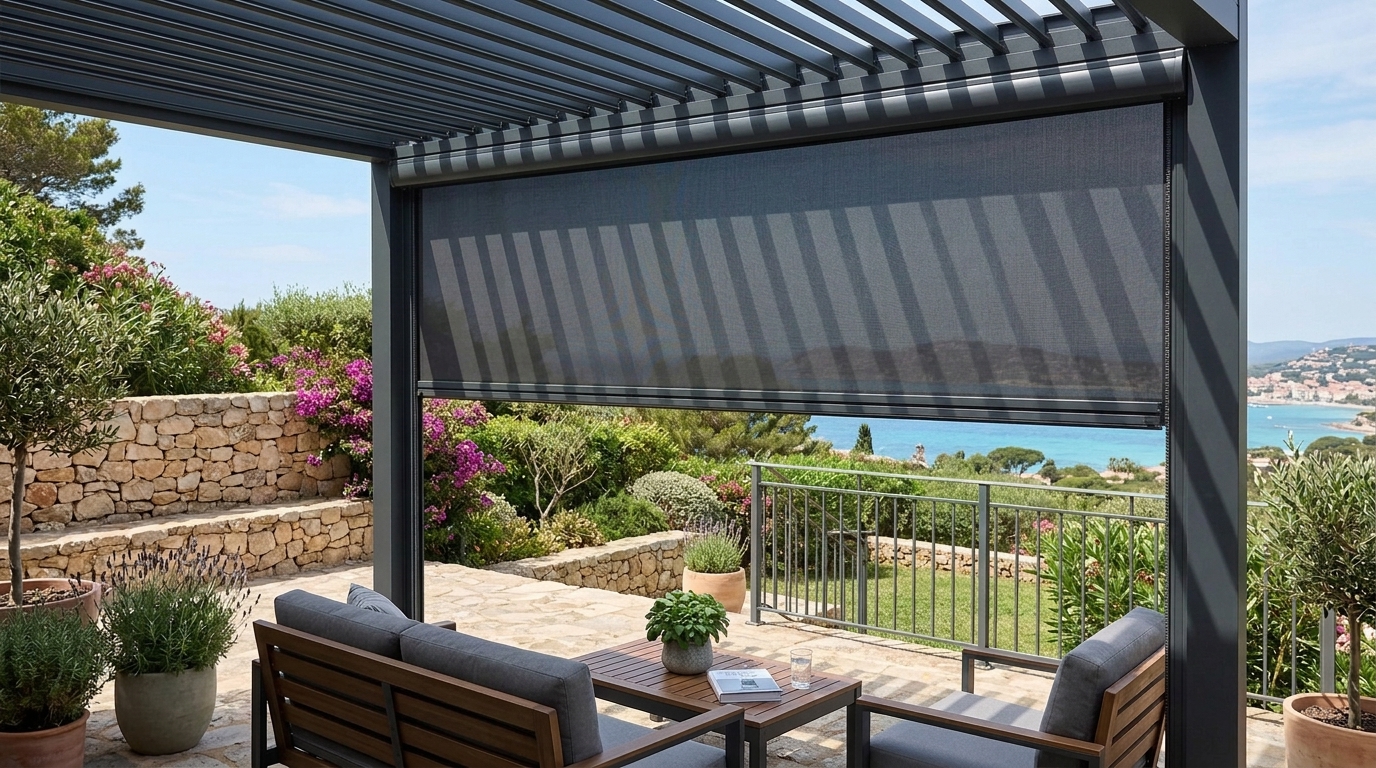
Clear PVC and solar mesh can both make a patio more usable, but they create very different environments. PVC prioritises a clear view and a stronger barrier to wind and rain. Mesh prioritises glare control, privacy and airflow.
The right answer depends on what makes the space uncomfortable now and how you want it to feel when the blinds are lowered.
Clear PVC: visibility and weather separation
Clear PVC forms a continuous transparent panel. It is well suited to openings where you want to keep a garden, pool or landscape visible while reducing wind and rain. In cool conditions it can help a covered patio feel more enclosed.
The trade-off is reduced airflow. Direct sun can also increase heat inside an enclosed area, so ventilation and orientation matter. Clear material needs careful cleaning with non-abrasive products to reduce scratches and preserve clarity.
Solar mesh: shade, glare control and ventilation
Mesh fabric filters sunlight and reduces glare without turning the patio into a closed room. It allows air to pass through and can provide daytime privacy, especially when the outside is brighter than the inside. Different openness factors change the balance between view and shade.
Mesh is not a clear rain sheet. It can improve comfort in light wind and intermittent rain, but water can pass through the weave under pressure. It is often the better everyday choice for hot, sun-exposed areas.
Privacy changes between day and night
Mesh privacy is affected by lighting. During the day, a darker mesh can make it difficult to see into a shaded patio from a bright exterior. At night, when lights are on inside, that relationship reverses. If night-time privacy is essential, discuss fabric density and lighting with the supplier.
Clear PVC offers little visual privacy. Its strength is maintaining the view, not screening it.
Can PVC and mesh be combined?
Yes. A patio does not need the same material on every side. Use mesh on western or northern exposures where heat and glare dominate, and clear PVC on the side where wind-driven rain or a valuable view is the main concern.
Some product ranges also allow clear windows within an opaque or mesh panel. The details depend on the system, panel size and how neatly the material can roll.
A simple decision checklist
Choose clear PVC when rain separation, wind reduction and an uninterrupted view rank highest. Choose mesh when shade, glare reduction, daytime privacy and ventilation matter most. Then choose the guide system according to wind exposure, not fabric alone.
Bring photographs and describe how the space is used at different times of day. That gives the consultant better information than selecting from a small sample indoors.
Plan your outdoor-blind project
Start with our complete outdoor blinds overview to compare free-hanging, wire-guide, channel and zip-guided systems. For a recommendation based on your opening, exposure and preferred material, request a measured consultation.
Frequently asked questions
Does clear PVC go yellow?
Quality, exposure and care affect long-term clarity. Use the recommended cleaning method, avoid abrasive products and roll the blind only when the material is clean and dry where practical.
Can you see through mesh outdoor blinds?
Yes, but view quality varies with fabric openness, colour and lighting. Darker mesh often preserves outward views better during daylight.
Which material is cooler?
Mesh usually supports better airflow and solar control. Clear PVC can trap warmth when it encloses a sun-exposed space, so ventilation is important.
Which option is easier to maintain?
Both need regular gentle cleaning. Mesh tends to disguise light dust, while clear PVC shows marks sooner and should be cleaned carefully to avoid scratches.