
Best Outdoor Blinds for Wind and Rain in South Africa

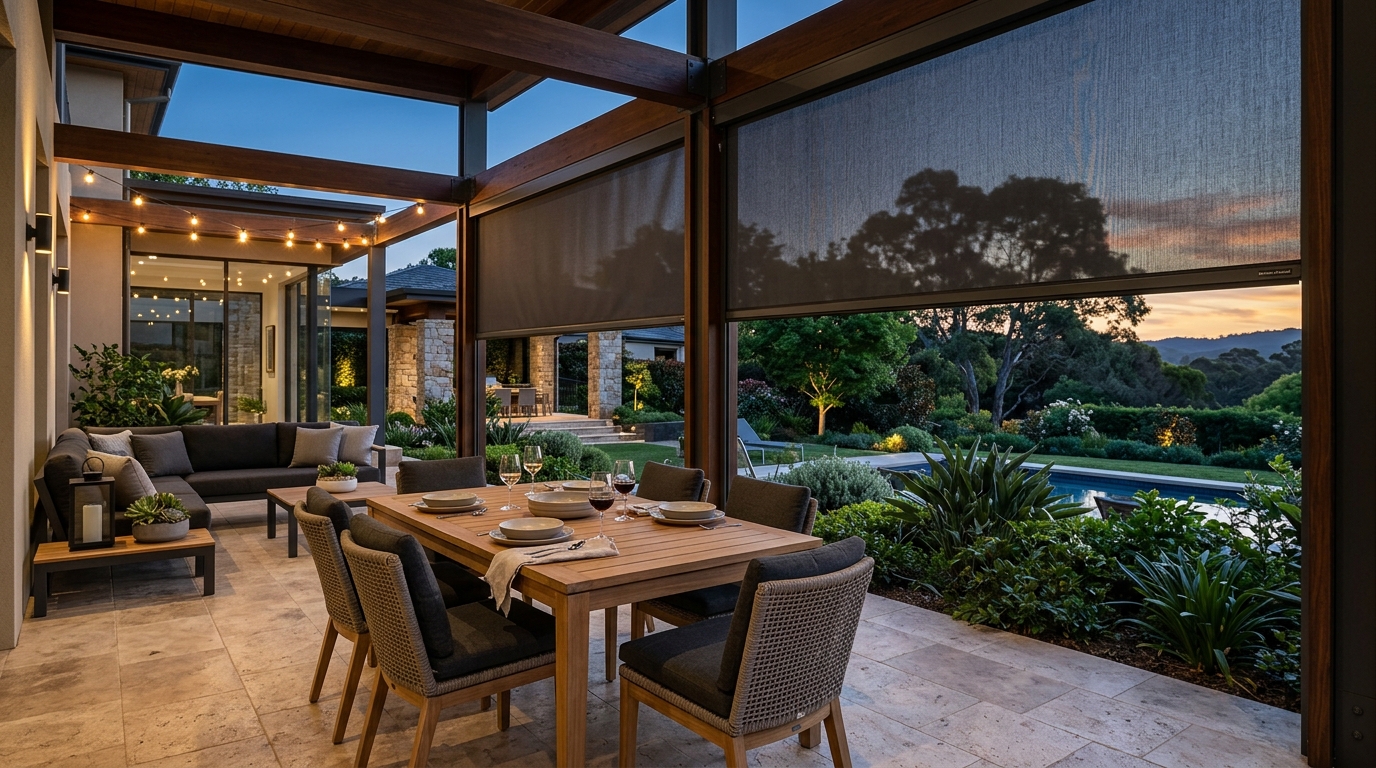
Wind and wind-driven rain are the two conditions that expose a weak outdoor-blind specification quickly. The best choice is not simply the heaviest-looking product; it is the system whose side retention, fabric and fixing method suit the opening.
South African patios range from protected courtyards to exposed coastal decks. Start with the site conditions, then select the blind.
Start with the opening and prevailing weather
Observe the patio during the weather you want to control. Is the wind mostly a steady breeze, or does it funnel between buildings? Does rain fall vertically, or arrive sideways? A roofed opening protected by walls needs less retention than an open veranda facing the prevailing wind.
Width, drop and mounting surface also matter. A large opening creates more wind load, while a weak fascia or unsuitable fixing point can limit the safe system. A professional measure should assess the structure as well as the dimensions.
Free-hanging and wire-guide blinds
Free-hanging blinds are effective for sun, glare and privacy in sheltered positions. Because their sides are not fully retained, they need space to move and should be raised before strong or gusty wind. Wire guides reduce sideways movement and keep a clean, open appearance, making them useful for moderate exposure.
Neither should be treated as a permanent storm wall. Their value lies in flexible shade and improved comfort when the conditions match the design.
Channel-guided and zip-guided systems
Side channels hold the blind more securely and are a sensible step up for frequently used patios or breezier openings. Zip-guided systems retain the fabric edge continuously in the channel, producing a more enclosed result and better resistance to gaps along the sides.
Greater retention does not make a blind indestructible. Maximum operating conditions depend on the product, size, installation and site. Follow the supplier’s operating guidance and retract the blind in severe weather.
Mesh or clear PVC for rain protection?
Solar mesh filters glare, provides daytime privacy and allows some airflow. It can deflect light rain, but fine openings in the fabric mean it is not a waterproof wall. Clear PVC blocks more wind and rain while preserving the view, although it reduces ventilation and can show marks more readily.
Some spaces benefit from a combination: mesh on sun-facing openings and clear material where weather protection and visibility are the priorities.
Details that improve a weather-ready installation
Correct tension, square channels, suitable fixings and a protected top roller all contribute to performance. Good drainage and sensible bottom-bar clearance help avoid trapped water. In coastal areas, cleaning salt deposits and checking moving parts should be part of routine care.
Ask the installer to demonstrate operation and explain when the blind should be raised. The right habits protect the system as much as the hardware does.
Plan your outdoor-blind project
Start with our complete outdoor blinds overview to compare free-hanging, wire-guide, channel and zip-guided systems. For a recommendation based on your opening, exposure and preferred material, request a measured consultation.
Frequently asked questions
Are outdoor blinds completely waterproof?
Outdoor blinds can greatly reduce wind-driven rain, but they are not permanent walls and small gaps may remain. Performance depends on the fabric, guide system and installation.
Which outdoor blind is best for strong wind?
A properly specified channel or zip-guided system generally offers more side retention than a free-hanging blind. The opening size, structure and product rating still need assessment.
Can I leave outdoor blinds down in a storm?
Do not assume so. Follow the product-specific operating instructions and retract blinds before conditions exceed their intended use.
Does mesh stop rain?
Mesh can reduce light, wind-driven rain while maintaining ventilation, but clear PVC provides a more continuous barrier when stronger rain protection is required.