
How to compare blind fabric samples at your window

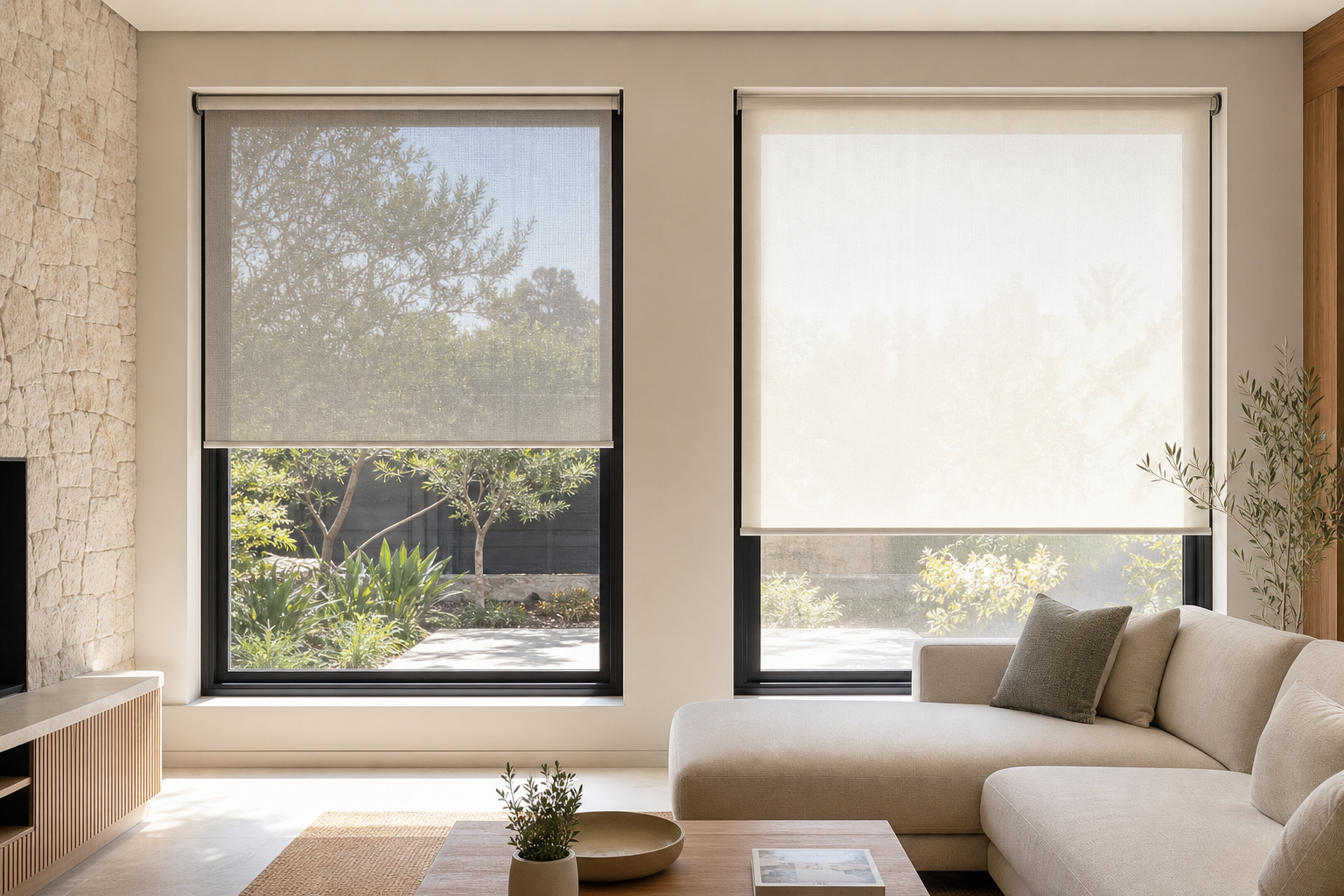
Compare blind fabric samples at the actual window, at the time the room becomes uncomfortable, and again with the evening lights on. Check the view, glare, visible silhouettes and colour separately. A sample helps narrow the specification; it does not reproduce every detail of a full installed blind.
Choosing between two attractive fabrics becomes easier when both face the same test. Instead of asking which swatch looks better on a table, give each one the job your window treatment needs to do.
Write the room’s brief before looking at colours
Choose one opening and describe its main problem in a sentence. For example: the lounge needs less afternoon glare while keeping a garden view, followed by stronger privacy after dark. Another room may need softer daylight without a clear view through the lowered blind.
Rank those requirements. A fabric that keeps more of the view may not provide the evening screening you want on its own. If you are still comparing the fabric families, read the sunscreen and light-filtering comparison first. Use the checks below to assess the shortlisted materials in your room.
Keep an accurate record of each sample
Record the collection or fabric reference and colour for every swatch. If you are comparing two rooms, note the room beside the reference. Similar names and pale colours are easy to confuse once several samples are laid out together.
Confirm which side should face the room and which way the sample should be held. Compare materials in the same position and lighting. A small swatch can show colour and weave, but its edges and limited area cannot demonstrate the complete coverage of an installed blind.
Check the daytime view from your normal seat
Hold the sample at the window and look from the place where you usually sit or work. Assess whether you can still recognise the view and whether the fabric itself feels visually prominent. Then look at the material beside the wall, flooring and upholstery.
Do this with both shortlisted samples rather than relying on memory. A phone photograph can help record the choice, but automatic exposure and screen settings can change colour and apparent brightness. Keep the physical reference as the basis for the final selection.
Assess glare when it actually happens
Visit the room at the time direct sun or reflected light causes difficulty. Sit at the desk or television position and describe what is uncomfortable: a reflection, a very bright window beside the screen, or light falling directly into your eyes.
Discuss that observation during the measure. Fabric choice, the size and position of the blind, and the position of the screen all contribute to the result. A small swatch cannot prove how an entire window will perform, so ask what larger sample or relevant installed example can be shown.
Repeat the privacy check after dark
Use the room’s normal evening lighting. Where the viewpoint is safely accessible and you have permission to use it, have another adult look from the relevant outside position while someone remains inside. Note whether people, movement or silhouettes are visible.
Do not treat a daytime view-through test as proof of night-time privacy. Sunscreen and light-filtering materials behave differently as the lighting changes. Where one fabric cannot meet both requirements, discuss a separate curtain or other suitable layer rather than assuming that a darker colour solves everything.
Compare the same four questions
- Can I keep the amount of daytime view I want?
- Does the proposed material address the specific glare problem?
- What is visible from the relevant outside viewpoint after dark?
- Does the colour work with the room in both lighting conditions?
Add a short note on care and operation. Confirm the recommended cleaning method for the exact material, and whether the chosen system can be operated conveniently around the furniture. The roller-blind range is a starting point for discussing the complete treatment.
Turn the sample choice into a measured specification
Keep the approved reference, room name and practical brief together. Ask the quotation to identify the fabric, colour, opening, hardware, controls and installation scope. Any need for a second privacy layer should appear in that discussion before the order is finalised.
Send ART Lifestyle your location, opening photographs and the time of day the problem occurs. Request a measured consultation or use WhatsApp 083 298 1740. The team can confirm service availability and the next step for your property.